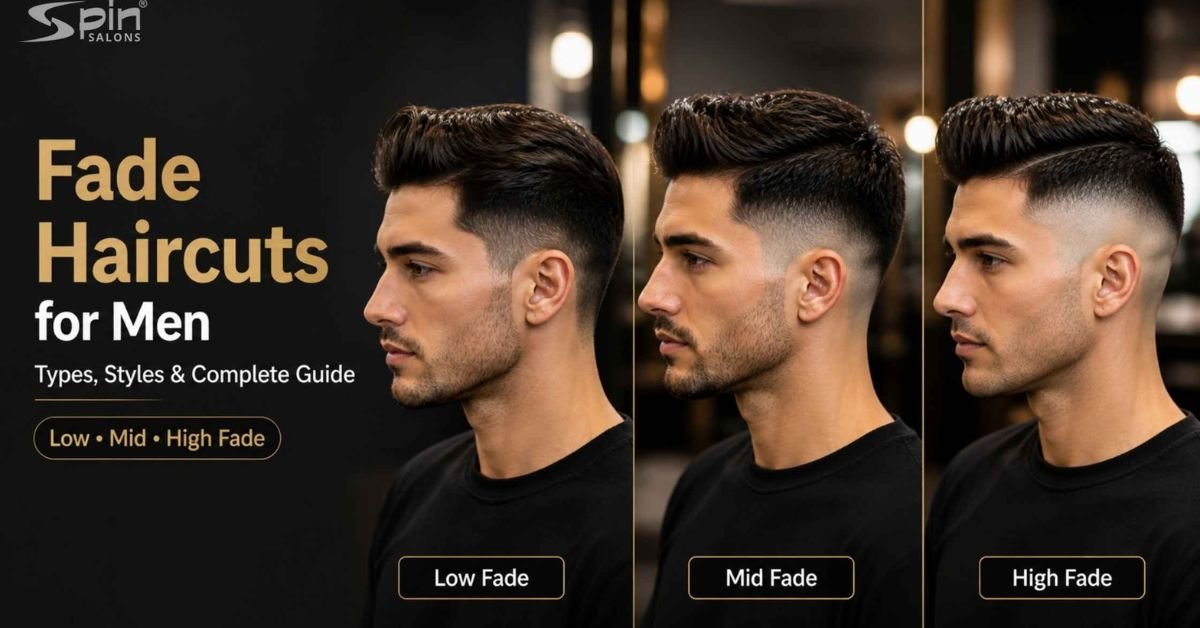
In the world of men’s grooming and modern barbering, few hairstyles have stood the test of time quite like the fade haircut. Versatile, sharp, and effortlessly clean, a fade seamlessly blends hair from a shorter length at the base of the neck up to a longer length on top.
Whether you are going for a professional boardroom look, an athletic style, or a bold high-contrast statement, there is a fade variation suited for every hair type and head shape.
In this comprehensive guide for Barber HQ, we will break down what a fade haircut is, the main types of fades, how to choose the right one, and expert tips on maintaining that fresh-out-of-the-barbershop finish.
What is a Fade Haircut?
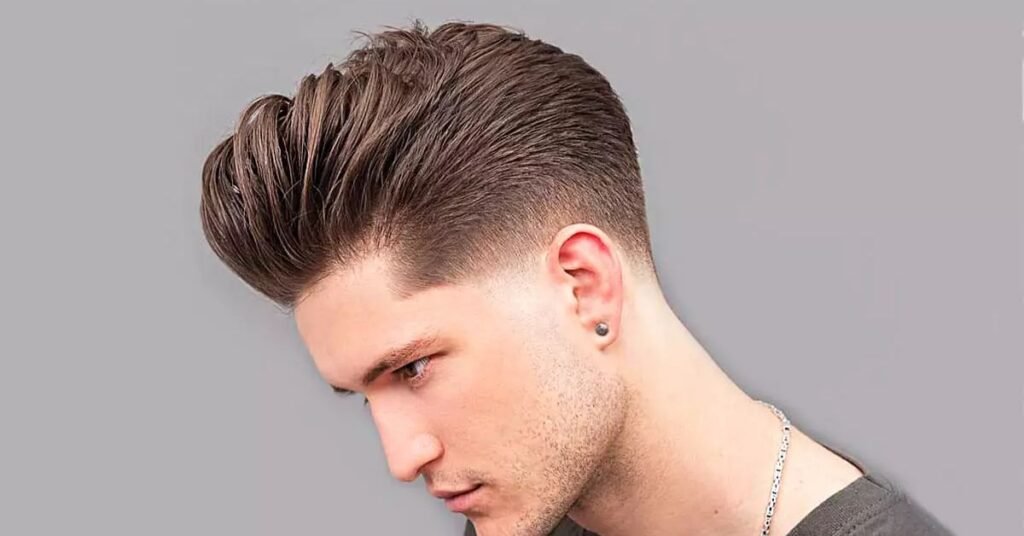
A fade haircut is a technique where a barber uses clippers and shears to gradually taper the length of your hair down to the skin or a very short length around the sides and back.
The signature characteristic of a great fade is a smooth, continuous blur—meaning there are no harsh lines or visible steps separating the short hair at the bottom from the longer hair on top.
The Primary Types of Fade Haircuts
Fades are generally categorized by where the fade line begins on the head and how short the hair goes. Here is the breakdown of the primary fade styles:
1. Low Fade
The low fade starts just above the ears and stays low around the nape of the neck. It offers a subtle, classic transition that is subtle enough for strict corporate work environments while keeping your edges clean.
- Best For: Beginners, professional office environments, and square or oval face shapes.
2. Mid Fade
Starting roughly halfway up the head (around eye or temple level), the mid fade provides the perfect balance between subtle and high-contrast. It is by far the most requested fade in modern barbershops worldwide.
- Best For: All hair types (straight, wavy, or curly) and versatile day-to-day styling.
3. High Fade
The high fade begins near the top of the head/crown area, creating a striking contrast between the long hair on top and the close-shaved sides. It draws immediate attention to the height and volume of your top hairstyle.
- Best For: Quiffs, pompadours, afro tops, and round or oval face shapes.
Popular Style Variations: Skin Fade vs. Taper Fade
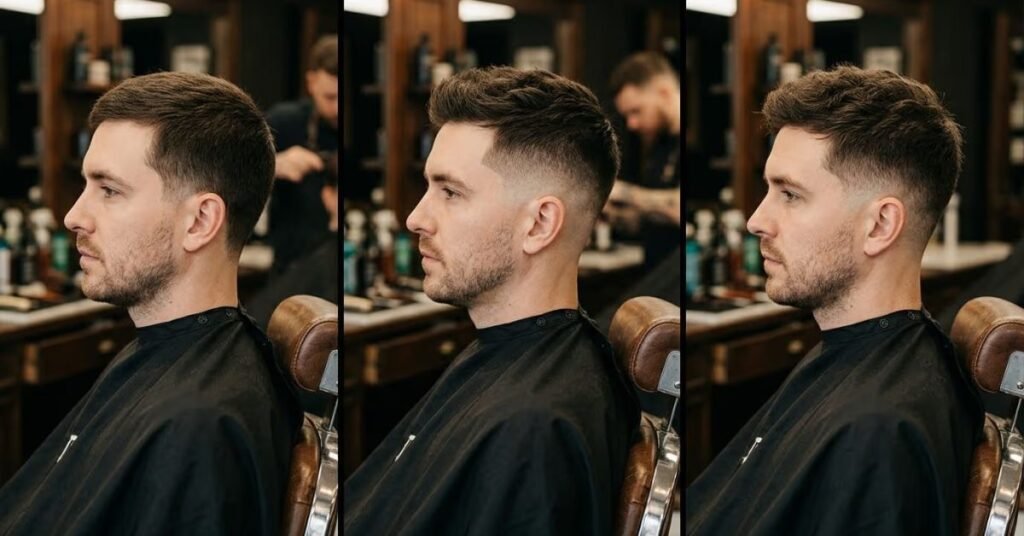
Beyond height, the technique used at the neckline and temples creates distinct variations:
| Fade Style | Description | Contrast Level | Maintenance Required |
| Skin / Drop Fade | Blends down to bare skin; drops in a curve behind the ear. | Very High | High (Touch-up every 1–2 weeks) |
| Taper Fade | Only fades the sideburns/temples and the lower nape. | Low / Medium | Moderate (Touch-up every 2–3 weeks) |
| Burst Fade | Fades in a circular pattern around the ears (popular with mullets/mohawks). | High | Moderate (Touch-up every 2 weeks) |
| Burst / Temple Fade | Clean micro-fade focused strictly around the temple area. | Subtle | Low / Moderate |
   [ Low Fade ]          [ Mid Fade ]          [ High Fade ]
   Starts near nape      Starts at temples     Starts near crown
   (Subtle & Clean)      (Balanced Look)       (High Contrast)
How to Choose the Best Fade for Your Face Shape
- Round Face: Choose a High Skin Fade paired with a textured quiff or pompadour to add vertical height and elongate your face profile.
- Oval Face: Lucky you! Oval faces suit almost every variation, from a classic Mid Taper Fade to a bold Drop Fade.
- Square Face: A Low or Mid Fade with short hair on top accentuates strong jawlines without over-emphasizing sharp angles.
- Long Face: Opt for a Low Taper Fade to avoid making your head look unnecessarily long or narrow.
How to Ask Your Barber for the Perfect Fade
When sitting down in the barber chair, clear communication guarantees the best results:
- Know Your Clipper Guard Numbers: Tell your barber what guard length you prefer at the shortest point (e.g.,
#0for skin,#1for 1/8 inch, or#2for 1/4 inch). - Specify the Height: State clearly whether you want a Low, Mid, or High fade.
- Bring a Reference Photo: Show 1 or 2 high-quality photos displaying both the sides and top of the style you want.
- Decide on the Top Length: Communicate whether you want to trim the top with scissors, add texture, or keep full length for slicking back.
Essential Fade Maintenance and Styling Routine
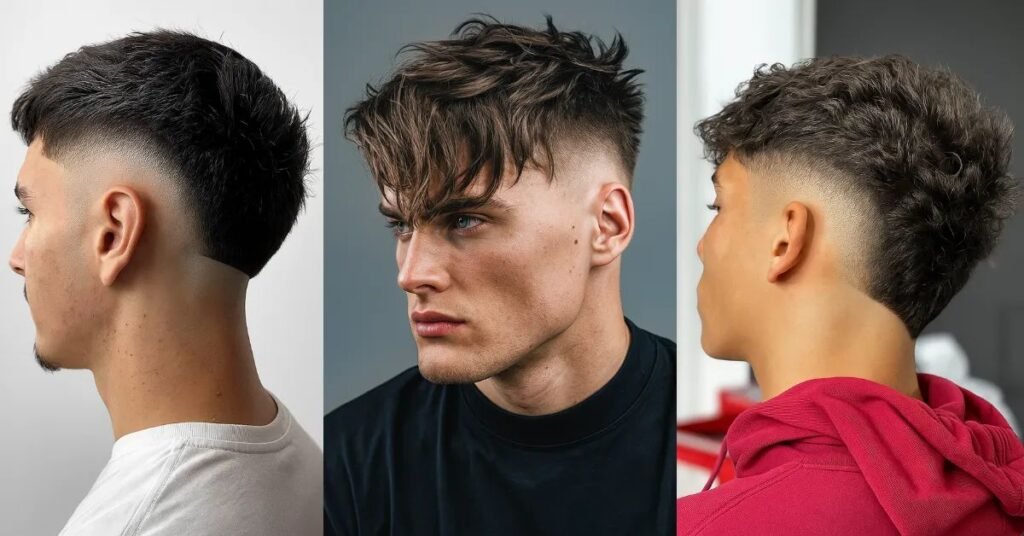
To keep your fade looking sharp between barbershop visits:
- Visit Your Barber Regularly: Skin fades require touch-ups every 1 to 2 weeks, while classic taper fades can stretch to 3 weeks.
- Use Quality Products:
- Use sea salt spray for natural volume.
- Apply matte clay/wax for messy, textured styles.
- Use pomade for slicked-back or pompadour looks.
- Moisturize Your Scalp: If you wear a skin fade, apply lightweight scalp moisturizer or sunscreen to prevent dry skin and sun damage on exposed areas.
Frequently Asked Questions (FAQs)
What is the difference between a taper and a fade?
A taper changes hair length gradually down the sides and back, leaving the natural hairline visible at the bottom. A fade usually blends hair much closer to the skin and completely removes the hair around the neck base and ears.
How long does a skin fade last?
A fresh skin fade looks its sharpest for the first 3 to 5 days. As hair grows back, the contrast softens. Most men book a touch-up trim every 10 to 14 days to keep it crisp.
Does a fade haircut work on thin or fine hair?
Yes! A low or mid skin fade can actually make thin hair on top appear thicker and fuller by removing the bulk from the sides and creating visual contrast.
How much does a fade haircut typically cost?
Depending on your location and the barbershop’s reputation, a professional fade haircut ranges between $25 and $60+, often taking 30 to 45 minutes for precise blending.
Final Thoughts
The fade haircut remains the undisputed king of modern barbershop culture due to its clean lines, adaptability, and sharp finish. Whether you prefer a subtle low taper or a high-contrast skin fade, understanding your options allows you to step into the barbershop with complete confidence.